2025 RNA Symposium
The 3rd Annual Symposium
Center for RNA Biology and Medicine
Keynote Lecture
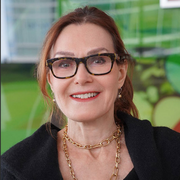
Lynne E. Maquat, PhD
Founding Director of the Center for RNA Biology
University of Rochester Medical Center
“Nonsense-mediated mRNA decay in human health and disease: Reframing the role of FMRP in Fragile X Syndrome”
Lynne E. Maquat, PhD. is the J. Lowell Orbison Endowed Chair and Professor of Biochemistry & Biophysics who holds concomitant appointments in Pediatrics and in Oncology, Founding Director of the Center for RNA Biology, and Founding Chair of Graduates Working in Science at the University of Rochester, Rochester, NY. She also Co-Directs the Center of Excellence in RNA Research and Therapeutics (CERRT). After obtaining her PhD in Biochemistry from the University of Wisconsin-Madison and undertaking post-doctoral work at the McArdle Laboratory for Cancer Research, she joined Roswell Park Cancer Institute before moving to the University of Rochester Medical Center. Dr. Maquat's research focuses on the molecular basis of human diseases, with particular in mechanisms of mRNA decay. Maquat discovered nonsense-mediated mRNA decay (NMD) in human diseases in 1981 and, subsequently, the exon-junction synthesis. She also discovered Staufen-mediated mRNA decay, which mechanistically competes with NMD and, by so doing, new roles for short interspersed elements and long non-coding RNAs. Additionally, she has defined a new mechanism by which microRNAs are degraded, thereby regulating mRNAs so as to promote the cell cycle. One of her current interests focuses on development of therapeutics for diseases that she has shown manifest hyperactivated NMD, including the most common single gene cause of intellectual disability and autism, Fragile X Syndrome. Maquat is an elected Fellow of the American Association for the Advancement of Science (2006); an elected Member of the American Academy of Arts & Sciences (2006), the National Academy of Sciences (2011), and the Israel Academy of Sciences & Humanities (2012-3). She was recently elected to the Council of Scientific Advisors for the International Centre for Genetic Engineering and Biotechnology (ICGEB), and initiative of the United Nations Industrial Development Organization (2022). She received the William C. Rose Award from the American Society for Biochemistry & Molecular Biology (2014), a Canada Gairdner International Award (2015), the International RNA Society Lifetime Achievement Award in Service (2010) and in Science (2017), FASEB Excellence in Science Award (2018), the Vanderbilt Prize in Biomedical Science (2017), the Wiley Prize in Biomedical Sciences from Rockefeller University (2018), the International Union of Biochemistry and Molecular Biology Medal (2019), the Wolf Prize in Medicine from Israel (2021), the Warren Alpert Foundation Prize from Harvard Medical School (2021), and the Gruber Genetics Prize from the Gruber Foundation and Yale University (2023). Most recently, she has been awarded the Dr. Paul Janssen Prize in biomedical Research from Johnson & Johnson (2024) and the Albany Prize in Medicine and Biomedical Research from Albany Medical Center (2024). Maquat is also well-known for her national and international efforts to promote women in science.
Visit Dr. Lynne E. Maquat's Faculty Profile
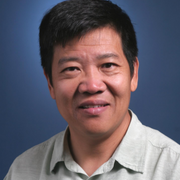
Shou-wei Ding, PhD
University of California, Riverside
"Novel strategy for RNA-based antiviral vaccines"
Shou-Wei Ding, PhD. is a Distinguished Professor in the Department of Microbiology and Plant Pathology at the University of California, Riverside. He received his PhD from Australian National University and held a faculty position in Singapore before joining UCR in 2000. Studies in his lab have contributed to the discovery of RNAi as new antiviral immunity mechanism in invertebrate and vertebrate animals as well as plants. He is an elected fellow of the American Academy of Microbiology and of the American Association for the Advancement of Science. He currently serves as an editor of PLoS Pathogens and mBio.
Visit Dr. Shou-Wei Ding's Faculty Profile
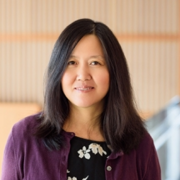
Lin He, PhD
University of California, Berkeley
"Friends or foes, transposons in the mammalian genome"
Lin He, PhD. received her B.S. in Biology from Tsinghua University and her PhD from Stanford University under the mentorship of Dr. Gregory S. Barsh. Dr. He as a postdoctoral fellow at Cold Springs Harbor Laboratory with Greg Hannon before joining the University of California, Berkeley in 2008. Currently, Lin is a Thomas and Stacey Siebel distinguished chair, professor, and a HHMI faculty scholar at UC Berkeley.
Visit Dr. Lin He's Faculty Profile
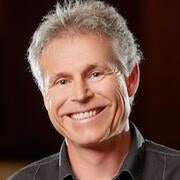
Klemens Hertel, PhD
Microbiology & Molecular Genetics, School of Medicine
University of California, Irvine
"The influence of RNA splicing in cancer and metabolism"
The Hertel lab focuses on understanding the mechanisms that allow for the generation of the alternative splicing patterns. The labs long-term goals are to understand how these processes are regulated, to relate the basic mechanisms of splice-site recognition to biological processes and to identify strategies to manipulate the expression of splicing isoforms in disease genes. To achieve these goals, we use a wide variety of approaches that include biochemistry, genetics, deep sequencing and bioinformatics. The Hertel lab is an interdisciplinary team with expertise in molecular biology, computational biology and physical chemistry.
Visit Dr. Klemens Hertel's Faculty Profile
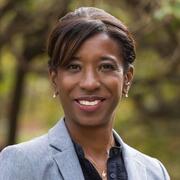
Tracy Johnson, PhD
Keith and Cecilia Terasaki Presidential Endowed Chair
Dean, Division of Life Sciences
University of California, Los Angeles
"RNA splicing, chromatin modification, and the coordinated control of gene expression"
Tracy Johnson, PhD. was appointed dean of life sciences in September 2020. She is holder of the Keith and Cecilia Terasaki Presidential Endowed Chair, and a professor of molecular, cell, and developmental biology. Dr. Johnson joined the UCLA faculty in 2013, is recognized for her scientific leadership and contributions to educational innovation. She is a Howard Hughes Medical Institute Professor and has served as associate dean for inclusive excellence in the division of life sciences since January 2015.
Prior to joining UCLA, Dr. Johnson was a member of the UC San Diego biological sciences faculty and a Jane Coffin Childs postdoctoral research fellow at the California Institute of Technology. She earned her bachelor's degree in biochemistry and cell biology at UC San Diego and her doctorate and molecular biology at UC Berkeley.
Visit Dr. Tracy Johnson's Faculty Profile
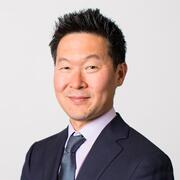
Daniel Lim, MD, PhD
Marjorie B. Hines Professor of Neurosurgery
Vice Chair for Research
Department of Neurological Surgery
Eli and Edythe Broad Center for Regeneration Medicine and Stem Cell Research
University of California, San Francisco
"lncRNA Pnky in the brain: from stem cells to RNA structure"
The focus of Dr. Daniel Lim's research is on neural stem cells and neurogenesis. He is particularly interested in the molecular biology of the population of neural stem cells found in the subventricular zone (SVZ). For neural stem cells to make neurons, daughter cells need to express certain sets of genes while repressing others. The maintenance is such lineage-specific transcriptional programs is in part regulated by chromatin structure - the "packaged" state of DNA with histone proteins. Recently, Dr. Lim's work has revealed that chromatin remodeling factor called Mixed Lineage Leukemia-1 (MLL1) is essential for postnatal neural stem cells to make new neurons. Currently, his work focuses on the molecular mechanisms by which MLL1 specifies a transcriptional program instructive for neurogenesis.
The Lim Laboratory also studies long non-coding RNAs (IncRNAs), which transcripts under 200 nucleotides long, with no evidence of protein coding potential. It is becoming clear that IncRNAs can have critical biological functions and roles in human neurological disease. Many IncRNAs interact with chromatin regulators and appear to regulate their function. The Lim Lab recently identified Pnky, a novel IncRNA transcript that is a potent regulator of neural stem cells in the embryonic and postnatal brain. Dr. Lim continues to study the function of this IncRNA in vio and the molecular mechanisms by which it regulates neurogenesis.
In the future, the Lim lab hopes to define the genetic programs and molecular mechanism that guide the formation of neurons and glia from SVZ neural stem cells, and translate these discoveries into cell-based and genetic therapies for human neurological diseases.
Visit Dr. Dan Lim's Faculty Profile
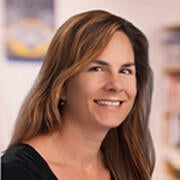
Amy Pasquinelli, PhD
Department of Molecular Biology, School of Biological Sciences
University of California, San Diego
"Less Stress with miRNAs"
Amy Pasquinelli, PhD. is a Professor of Molecular Biology at the University of California, San Diego. The overall goal of research in Pasquinelli lab is to understand how post-transcriptional regulation of gene expression contributes to organismal development and viability. The lab uses C. elegans as a model animal system to investigate how microRNAs (miRNAS) and other non-coding RNAs (ncRNAs) are expressed and regulate gene expression in an endogenous context. The pathways being studied are broadly conserved throughout animal phylogeny and relevant to understanding the role of ncRNAs in human development and disease. Dr. Pasquinelli received a B.A. in Biology from Bucknell University, a PhD. in Biomolecular Chemistry from the University of Wisconsin, Madison, and did postdoctoral training at MGH & Harvard Medical School. Research in the Pasquinelli lab has been funded by the National Institutes of Health (NIH), American Federation for Aging Research (AFAR), Keck, Searle Scholar, V, Peter Gruber and Emerald Foundations.
Visit Dr. Amy Pasquinelli's Lab
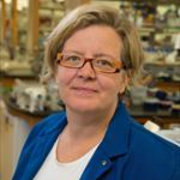
Kathrin Plath, PhD
Professor
Department of Biological Chemistry
University of California, Los Angeles
"Unraveling XIST: Mechanisms of X Chromosome Dosage Compensation"
Kathrin Plath, PhD. earned her doctorate in cell biology from Humboldt University and completed postdoctoral training at UCSF and the Whitehead Institute. She joined the UCLA faculty in 2066 and studies how epigenetic mechanisms control pluripotency and cell fate change. Her research focuses on mechanisms underlying X-chromosome dosage compensation, somatic cell reprogramming, and genome organization. She serves on several editorial boards.
Visit Dr. Kathrin Plath's Faculty Profile
Symposium Schedule
3rd Annual RNA Symposium Abstract Booklet
| 8:30-9:05am | Registration - Badge Pickup - Poster set-up |
| 9:05-9:10am |
Symposium opens, "Welcome Address"
Rodolfo H. Torres, PhD., Vice Chancellor for Research |
| 9:10-9:15am |
Update on Center for RNA Biology & Medicine
Sika Zheng, PhD., Founding Director, RNA Biology and Medicine Professor, Division of Biomedical Sciences, School of Medicine |
| 9:15-10:15am |
“Nonsense-mediated mRNA decay in human health and disease: Reframing the role of FMRP in Fragile X Syndrome”
Keynote speaker
Lynne E. Maquat, PhD.
J. Lowell Orbison Endowed Chair and Professor of Biochemistry & Biophysics |
| 10:15-10:25am | Group Photo |
| 10:25-10:45am | Coffee break |
| Session I: RNA Splicing | Session I Chair: Adam Norris, PhD. |
| 10:45-11:20am |
"RNA splicing, chromatin modification, and the coordinated control of gene expression"
Tracy Johnson, PhD.
Professor, Molecular, Cell, and Developmental Biology
Keith and Cecilia Terasaki Presidential Endowed Chair Dean, Division of Life Sciences University of California, Los Angeles
|
| 11:20-11:55am |
"The influence of RNA splicing in cancer and metabolism"
Klemens Hertel, PhD.
Professor, & Chair
Microbiology & Molecular Genetics, School of Medicine University of California, Irvine |
| 11:55am-1:15pm | Lunch and poster presentations |
| Session II: Long noncoding RNAs and Transposons | Session II Chair: Karine Le Roch |
| 1:15-1:50pm |
"lncRNA Pnky in the brain: from stem cells to RNA structure"
Daniel Lim, MD., PhD.
Marjorie B. Hines Professor of Neurosurgery
Vice Chair for Research Department of Neurological Surgery Eli and Edythe Broad Center for Regeneration Medicine and Stem Cell Research University of California, San Francisco |
| 1:50-2:25pm |
"Unraveling XIST: Mechanisms of X Chromosome Dosage Compensation"
Kathrin Plath, PhD.
Professor
Department of Biological Chemistry University of California, Los Angeles |
| 2:25-3pm |
"Friends or foes, transposons in the mammalian genome"
Lin He, PhD.
Professor & Thomas and Stacey Siebel Distinguished Chair in Stem Cell Research
University of California, Berkeley |
| 3-3:35pm | Afternoon break and poster presentations |
| Session III: miRNA and RNAi | Session III Chair: Changcheng Zhou, PhD. |
| 3:35-4:10pm |
"Less Stress with miRNAs"
Amy Pasquinelli, PhD.
Professor
Department of Molecular Biology, School of Biological Sciences University of California, San Diego |
| 4:10-4:45pm |
"Novel strategy for RNA-based antiviral vaccines"
Shou-wei Ding, PhD.
Distinguished Professor
University of California, Riverside |
| 4:45-5pm | Award announcements and closing remarks |